The Easiest 8-12% Your Business Will Ever Save: Community Solar in MD & DE
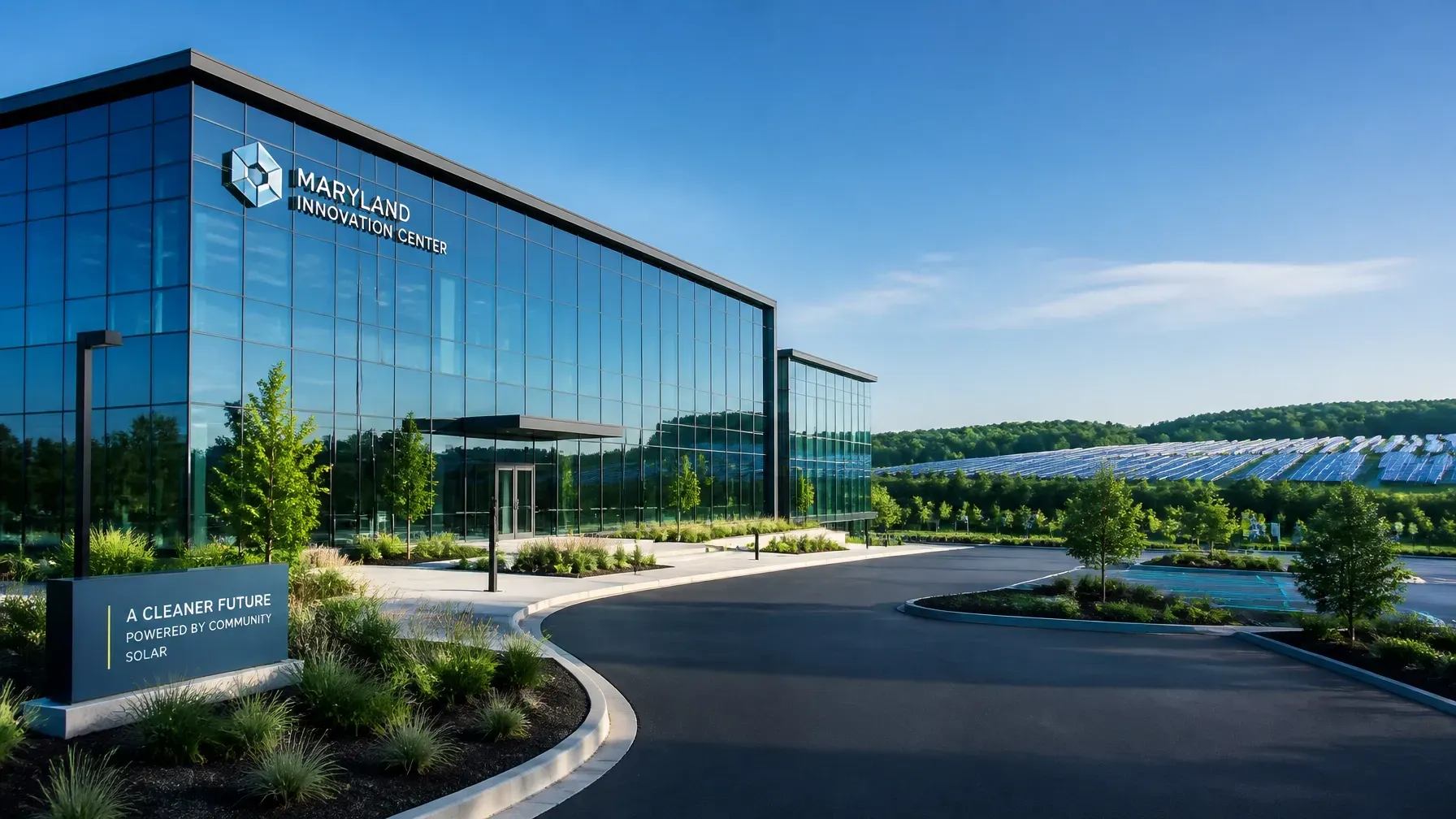
In the world of commercial operations, finding a way to slash overhead by double digits without spending a dime upfront is usually a red flag for a "too good to be true" offer. But in 2026, for businesses operating within the BGE, Pepco, Potomac Edison, and Delmarva utility territories across Maryland and Delaware, this isn't a sales pitch, it’s a regulatory reality.
Community solar has evolved from a niche pilot program into a mainstream financial strategy for savvy business owners. If your business pays its own utility bills but doesn't have the roof space, the capital, or the long-term lease to install traditional solar panels, community solar is your bridge to immediate savings.
The good news? You can typically reduce your monthly electricity spend by 8% to 12% simply by enrolling. Here is how your business can capture this "easy win."
Key Takeaways
- Zero Upfront Costs: No installation, no equipment maintenance, and no capital expenditure.
- Guaranteed Savings: Most subscriptions offer a fixed percentage discount (typically 8–12%) on the solar credits applied to your bill.
- Tenant-Friendly: Perfect for businesses that rent their office, warehouse, or retail space.
- Market Reach: Available to businesses in BGE, Pepco, Potomac Edison, and Delmarva (MD & DE) territories.
- Risk Mitigation: Electric Advisors handles the vetting to ensure you choose a project with favorable terms and no hidden cancellation fees.
How It Works: Solar Without the Panels
Traditional solar requires a suitable roof, a massive check for installation, and a 20-year commitment. For many businesses, especially those in high-rises, leased retail spots, or multi-unit warehouses, this is impossible.
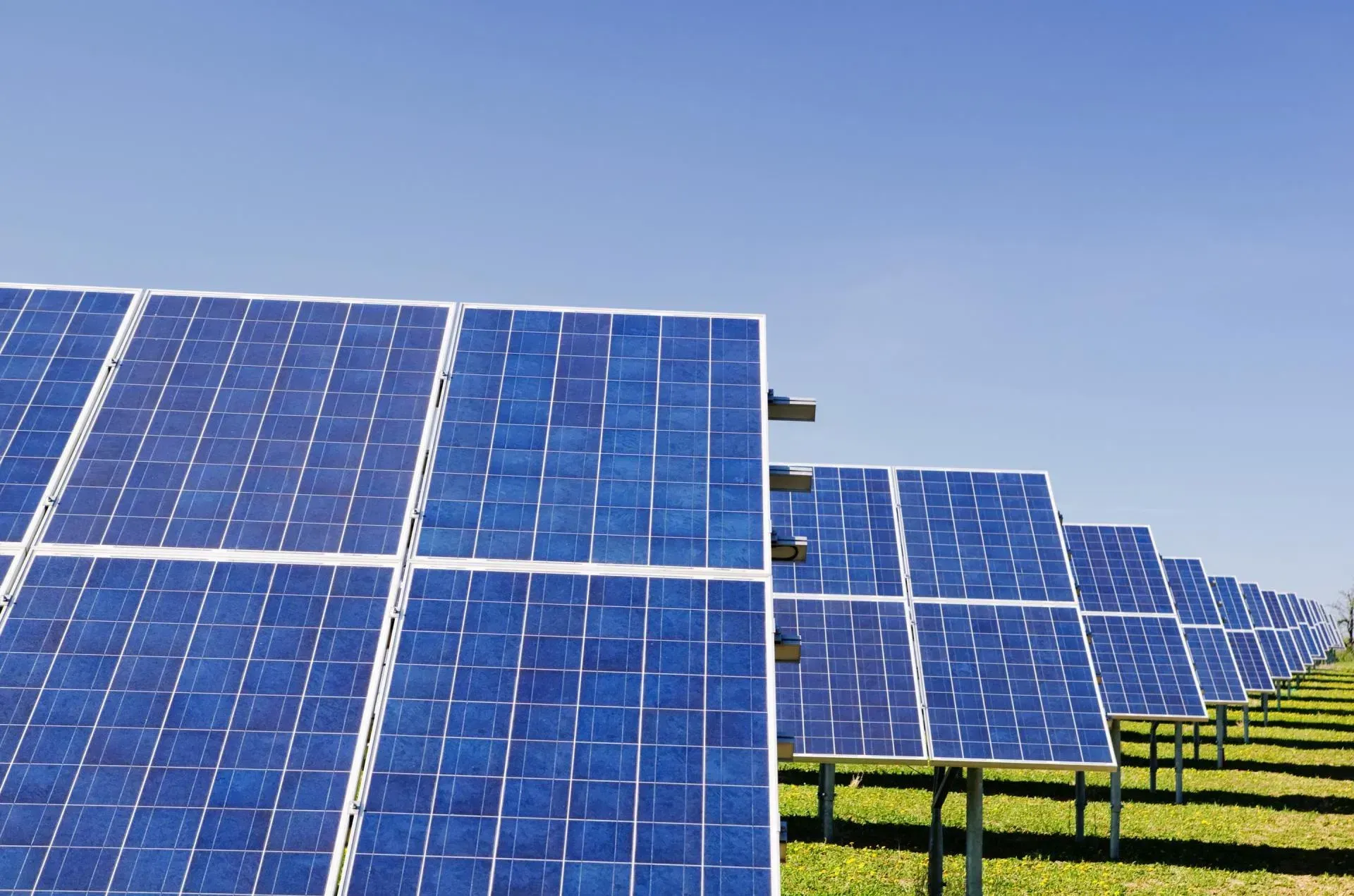
Community solar flips the script. Large-scale solar "farms" are built elsewhere in your utility’s territory. You "subscribe" to a portion of that farm’s energy production. Your utility (like BGE or Pepco) tracks how much energy your share produced and applies a
bill credit directly to your monthly invoice.
The Math of an 8-12% Reduction
How does "subscribing" actually save you money? It comes down to the discounted credit model.
- The Credit: The solar farm produces electricity and sends it to the grid. Your utility gives you a credit for that energy (e.g., $1,000 worth of solar credits).
- The Subscription Fee: You pay the community solar provider for those credits, but at a discounted rate, usually 8% to 12% less than the credit’s value.
- The Result: If you receive a $1,000 credit but only pay the provider $880 for it, your business just saved $120 on that month’s bill with zero effort.
Implications for Businesses in MD & DE
Maryland and Delaware have become two of the most aggressive states for community solar expansion. However, the rules vary slightly depending on where your meter is located.
Maryland: BGE, Pepco, Potomac Edison, and Delmarva MD
Maryland’s permanent community solar program is designed to diversify the state’s energy mix while lowering costs for commercial accounts. Just as important for business owners, Maryland utilities now process community solar directly on the utility invoice through Consolidated Billing. That means customers in BGE, Pepco, Potomac Edison, and Delmarva Maryland no longer deal with two separate community solar bills. Instead, the credit and related community solar charges are reflected on the utility invoice, which makes reconciliation, bookkeeping, and month-end accounting much easier for your business.
Delaware: Delmarva Power
In Delaware, the program is governed by the Delaware Public Service Commission. Any business customer of Delmarva Power is eligible to participate. You can even subscribe to multiple projects (up to four) as long as the total output doesn't exceed 110% of your annual consumption. Depending on the project and billing setup, Delaware participants may still receive two separate bills, or may be in a transition period as billing structures evolve. For more on Delaware-specific opportunities, view our Delaware energy guide.
Opportunities for Tenants and Property Owners
One of the biggest hurdles in commercial energy has always been the "split incentive." If a property owner installs solar, the tenant gets the lower bill, so the owner has no reason to invest. Conversely, a tenant won't pay for panels on a building they don't own.
Community solar solves this.
- For Tenants: You can enroll regardless of what your landlord thinks. The subscription is tied to your utility account, not the physical building. If you move to another location within the same utility territory, your subscription moves with you.
- For Property Owners: You can offer community solar enrollment as a value-add perk to your tenants, helping them lower their operating costs without you having to manage a construction project on your roof.
> "Community solar allows businesses to participate in the green energy transition without the structural and financial risks of physical construction. It is a pure financial play that happens to also meet ESG goals." , Electric Advisors Analysis

The Role of an Energy Broker: Why You Need Vetting
While the savings are real, not all community solar contracts are created equal. Some projects may have long waitlists, while others might have restrictive cancellation clauses or complex billing structures that create administrative headaches for your accounting team.
At Electric Advisors, Inc., we act as your filter. We don't just "find" a project; we audit the provider's track record and contract terms to ensure the 10% or 12% discount is actually what hits your bottom line.
Our commercial utility bill audit is the first step. We look at your current usage patterns to determine exactly how many kilowatts you should subscribe to. Subscribing to too much can actually lead to wasted credits, while subscribing to too little leaves money on the table. We find the "Goldilocks" zone for your business.
Frequently Asked Questions (FAQs)
1. Does my power come directly from the solar farm?
No. Your physical power still comes through the same lines managed by BGE, Pepco, or Delmarva. The community solar farm feeds the general grid, and you receive financial credit for your "share" of that production. You will never experience a blackout because the sun isn't shining.
2. Will I get two bills?
In Maryland, no. For businesses in BGE, Pepco, Potomac Edison, and Delmarva MD, community solar is now processed directly on the utility invoice through Consolidated Billing, so you typically see everything on a single bill instead of managing two separate statements. That is a meaningful operational win for accounting teams because it simplifies bill tracking, reconciliation, and payment processing.
In Delaware, it may still depend on the project and billing structure. Some customers may still receive a separate bill from the community solar provider, while others may be part of a transition toward more consolidated billing.
3. What happens if my business moves?
As long as your new location is within the same utility territory (e.g., you move from one office in Rockville to another in Bethesda, both under Pepco), your subscription can typically be transferred easily.
4. Is there a credit score requirement?
Most commercial community solar projects do require a basic credit check, much like signing up for any other utility service. We help businesses with various credit profiles find projects that fit their needs.
Take the Next Step
Reducing your energy spend by 12% shouldn't require a construction crew and a six-figure loan. Community solar is the most pragmatic way for Maryland and Delaware businesses to lower their overhead while supporting local renewable energy.
The slots for these projects are limited and often fill up months before the solar farm even goes live. Don't leave your savings to chance. Let Electric Advisors do the heavy lifting of shopping the market for you.
Ready to see how much your business can save? Compare rates and explore community solar options today or read how we've helped other local businesses optimize their energy spend.