

Mobilize Against the Montgomery County Energy Tax
April 29, 2010
Today, Thursday, April 29, the MFP/T&E
committees’ worksession on the energy tax will be held in the 3rd floor auditorium at the County Council building at 1:30 p.m. If you have time in your afternoon, the Chambers are urging members to attend the hearing, and show in force, that this is not the time to place any more of a burden on the business community than we already have!
I think I'm going to this. I hope to see you there.
---
We first alerted you earlier this month to a move by Montgomery County (Maryland) County Executive Ike Leggett to double the county's energy tax. What's more, it'll be done in a way that really, really hurts businesses.
As someone who is out helping businesses reduce their costs by negotiating lower electricity and natural-gas rates, I see that the economy is just starting to turn around a bit for some companies here in the mid-Atlantic. Other businesses, though, are still mired in the recession.
Let me be clear: This tax will hurt businesses at the worst time for them. We're talking about any business that pays its own utility bills. And if you think that you're off the hook because you're in an office building and don't pay your own utilities, think again. Your landlord still has to pay the tax. Where's that money going to come from? Higher rents or CAM fees, maybe?
Three of our Affinity Partners -- the Bethesda-Chevy Chase Chamber of Commerce, the MidAtlantic Association of Cleaners (MAC) and the Olney Chamber of Commerce -- have joined with other Chambers and business groups in the county to defeat this tax. They're rallying hard, and we at EA are happy to help them spread the word.
Here's what one Legislative Alert says about the tax:
The County Executive has proposed that the County Council impose a drastic increase in the energy tax of all residents and non-residents throughout the County, in order to raise at least $80 million to offset the County's budget gap. It is important to note that the Executive has focused on the impact of this increase on residential customers, which is expected to be minimal ($5 per month), but has not acknowledged the dramatic impact on businesses, which are charged a much higher rate. This regressive tax hike was first proposed at 40%, then was increased to 63.7% and later to double the current tax rate.
Please know that this proposed increase can possibly go even higher. In the packet that was given to the County Council on Friday, the following statement was made by Council staff: "Given the recent news of further shortfalls in revenue from the County income tax, Council staff would not be surprised to see another increase in the proposed rates when the Executive submits revised budget recommendations this week."
...
As an example, one apartment building in downtown Bethesda will be paying an increase of $20,500 in taxes - per year! A non-profit organization that serves children currently pays $21,582 in energy taxes. With this proposed increase, they will need to pay $35,330 - an increase of $13,747! No one is exempt from these taxes in Montgomery County.
I want to emphasize a point made above: "It is important to note that the Executive has focused on the impact of this increase on residential customers, which is expected to be minimal ($5 per month), but has not acknowledged the dramatic impact on businesses, which are charged a much higher rate."
Want to do something about it? We've provided several items with which you can take action (below), including the actual text of letters and alerts being sent to Council and to individual chamber/business group members, the way to calculate your tax, and e-mail addresses of your representatives in Council.
How to Calculate Your Businesses' Tax Increase
1) Find your current Montgomery County Energy Tax amount on page 2 of your utility bill, right hand side, under "Distribution Services."
2) Multiply that amount by 1.00.
3) This is the additional tax you would pay each month (on average) immediately upon final approval by the County Council in May.
Other Resources
Link to the Council's Packet on the Energy Tax
Copy of the letter sent by Chambers and business organizations to Council President Floreen (.doc/Word file)
Copy of the Legislative Alert sent by MAC President Richard Ehrenreich to its members (.doc/Word file)
The time to act is NOW. Even if you don't own a business in Montgomery County, this tax can have a direct impact on your life. First off, your own energy bills will go up. If you live in an apartment building, you should probably expect your rent to go up even higher when it comes time to renew your lease. And if you live in a condo, it'll cost more to cool, heat and light those common areas. So you might be saying "hello" to higher condo association fees.
Also, a business you know and love may have to shut its doors (or raise prices) because of this new tax. And if you work for a business that's already on thin ice, this new tax may sent it plunging into the icy waters of bankruptcy or shutting down entirely.
That's why this is one of those cases where both business owners and citizens alike need to stand together and say "NO" to this new tax.
By the way, this blog will not become political in tone. We just couldn't let this particular issue go by without saying something, especially because our affected Affinity Partners are in the battle. We always stand with our partners.
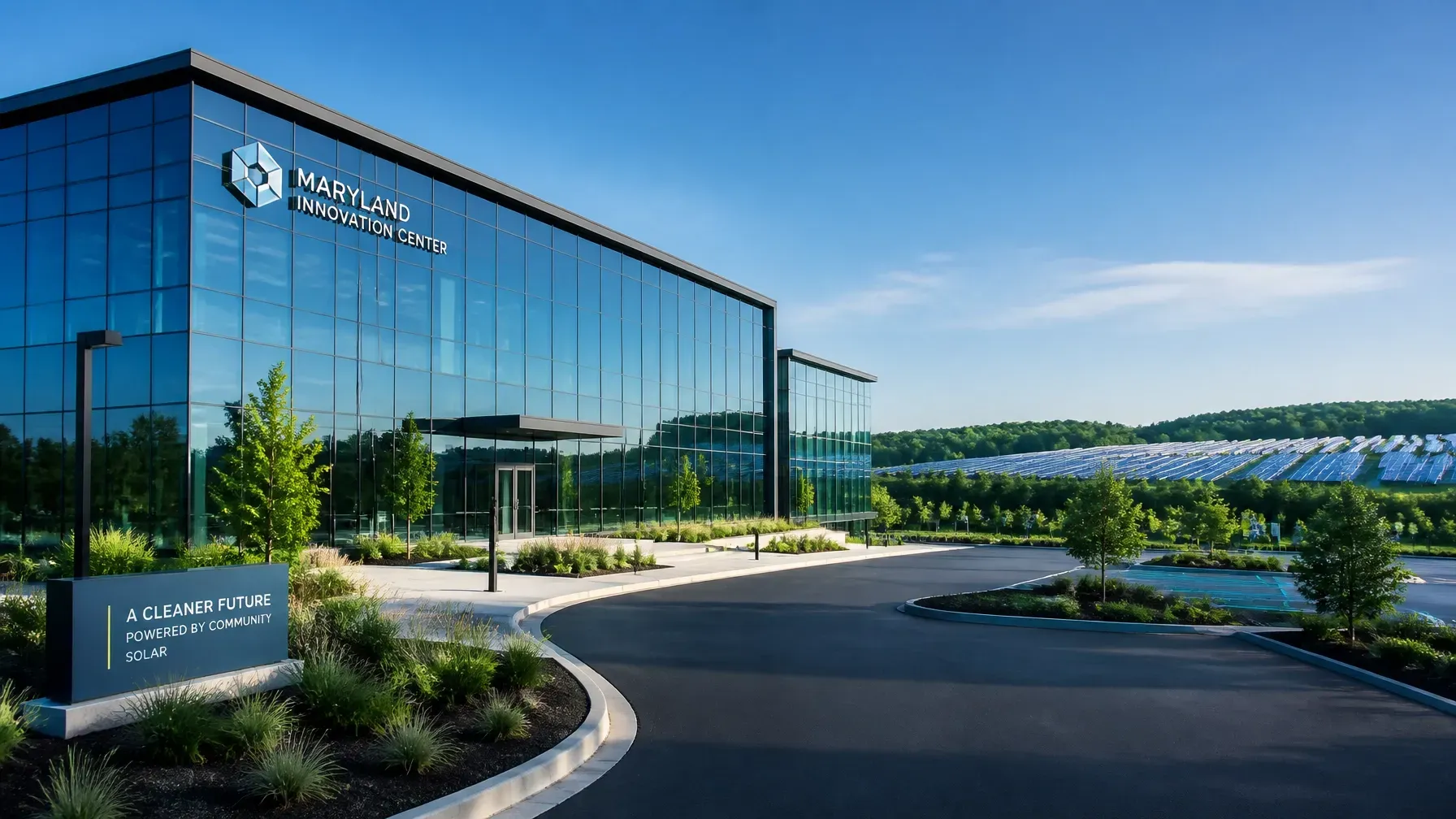
In the world of commercial operations, finding a way to slash overhead by double digits without spending a dime upfront is usually a red flag for a "too good to be true" offer. But in 2026, for businesses operating within the BGE, Pepco, Potomac Edison, and Delmarva utility territories across Maryland and Delaware, this isn't a sales pitch, it’s a regulatory reality. Community solar has evolved from a niche pilot program into a mainstream financial strategy for savvy business owners. If your business pays its own utility bills but doesn't have the roof space, the capital, or the long-term lease to install traditional solar panels, community solar is your bridge to immediate savings. The good news? You can typically reduce your monthly electricity spend by 8% to 12% simply by enrolling. Here is how your business can capture this "easy win." Key Takeaways Zero Upfront Costs: No installation, no equipment maintenance, and no capital expenditure. Guaranteed Savings: Most subscriptions offer a fixed percentage discount (typically 8–12%) on the solar credits applied to your bill. Tenant-Friendly: Perfect for businesses that rent their office, warehouse, or retail space. Market Reach: Available to businesses in BGE, Pepco, Potomac Edison, and Delmarva (MD & DE) territories. Risk Mitigation: Electric Advisors handles the vetting to ensure you choose a project with favorable terms and no hidden cancellation fees.

For most business owners in Washington, D.C. and Maryland, June 1st marks the unofficial start of summer: the return of rooftop happy hours, tourists swarming the National Mall, and the inevitable cranking of the HVAC system. But in the world of energy management, June 1st is something much more significant. It is the "Energy New Year." If you manage a commercial property, a non-profit, or a restaurant, this date represents the reset button for how your utility costs are calculated for the next twelve months. While many decision-makers focus solely on the "supply rate" on their bill, there is a hidden mechanism called the Peak Load Contribution (PLC) that could be quietly inflating your costs by thousands of dollars The good news? You aren’t powerless. By understanding how the grid works and taking a few strategic steps this spring, you can "beat the surge" and secure better financial predictability for your organization. The June 1st Milestone: Why It’s the "Energy New Year" In the Mid-Atlantic region: specifically within the territories served by utilities like Pepco and BGE: we operate under the PJM Interconnection . PJM is the regional transmission organization that coordinates the movement of wholesale electricity across 13 states and D.C. Every year on June 1st, PJM begins a new "delivery year." This is the date when the "Capacity Tags" (or PLC) assigned to every commercial building are updated based on the previous summer’s usage. Why does this matter to you? Because the capacity charge often makes up 25% to 40% of a commercial electricity bill. If your building was inefficient during the hottest days of last summer, you are about to pay the price for it starting this June. Conversely, what you do this summer will dictate your fixed costs for June 2027 through May 2028. The Hidden Problem: Understanding Capacity Charges and Your PLC Most business owners look at their bill and see "Kilowatt-hours (kWh)": that’s how much energy you used. But the Capacity Charge is based on your "Peak Load Contribution." Think of it like a "reservation fee" for the grid. PJM needs to ensure there is enough power available if every single building turned on every single light and AC unit at the exact same moment. To fund this readiness, they charge businesses based on their highest usage during the grid's "Five Peak Hours" of the previous summer. The Problem: If your restaurant, condo building, or school had a massive spike in usage on a Tuesday afternoon in July when the grid was stressed, your PLC (or Capacity Tag) will be high. You will then be billed at that "peak" rate every single month for the following year, regardless of how little energy you use in the winter. For many commercial clients, this is a "ghost charge" that feels impossible to control. But with the right services , it becomes a manageable variable.

For business owners in Maryland, Washington, DC, and Virginia —right here in our backyard —energy costs are more than just a line item: they are a significant variable that can impact quarterly profitability and long-term operational planning. In recent years, the natural gas market has been characterized by notable volatility. From global supply chain disruptions to shifting domestic production levels, the price you pay for the blue flame in your furnace or the heat in your commercial kitchen has likely felt like a moving target. At Electric Advisors, Inc. , we believe that data-driven decision-making is the only way to effectively manage utility expenses. To help you understand where the market has been and where it is going, we have analyzed the historical procurement costs for Washington Gas (WGL) and compared them to the current opportunities available through competitive suppliers across Maryland, Washington, DC, and Virginia. The results are clear: across the WGL service territory in MD, DC, and VA , the cost of sticking with the utility’s default Purchased Gas Charge (PGC) may be significantly higher than many business owners realize. The Benchmark: Washington Gas Historical PGC Rates in Maryland, DC, and Virginia Every month, Washington Gas updates its Purchased Gas Charge (PGC) . This is the rate at which the utility passes through the cost of the natural gas it buys on the wholesale market to its customers. By law, the utility does not make a profit on the gas itself; they make their money on the delivery and infrastructure. However, the price they pay—and the price you eventually see on your bill—is subject to the fluctuations of the monthly wholesale market. For businesses in the broader WGL footprint, the important takeaway is this: Washington Gas default supply pricing and competitive market opportunities are consistent across its service territory in Maryland, Washington, DC, and Virginia. In other words, the same benchmark applies whether your business is in suburban Maryland, downtown DC, or Northern Virginia. Looking back at the last 24 months across the WGL service territory in MD, DC, and VA , we see a story of dramatic shifts: 24-Month Average WGL PGC: Approximately $0.68 per therm . The 2025 Spike: In April 2025, rates peaked at a staggering $0.8085 per therm . The 2026 Moderation: As of April 2026, the WGL rate has settled to $0.6382 per therm . While the 2026 rate is a welcome decrease from the highs of the previous year, it remains significantly higher than the rates seen a decade ago. For context, in 2010, the rate hovered around $0.32 per therm. We have seen a steady, long-term upward trend that necessitates a more proactive approach to commercial natural gas rates .