Green Power Gets Black Eye in Montgomery County
June 7, 2010
One unintended result of two recent moves by the Montgomery County (Maryland) Council, taken in the name of tightening the budget, will adversely affect the "green" electricity movement in the county.
The first action involves a subject we've covered extensively here at Electric Advisors: the county's huge energy-tax increase. We have an entire area here at the site devoted to the tax, and how it will affect businesses and residents in the county.
The second is one that didn't get much press coverage: the elimination of the Clean Energy Rewards program. According to the County's Web site:
The Clean Energy Rewards program provided Montgomery County homes and businesses an incentive (half a cent per kilowatt-hour of clean energy used) for purchasing clean, renewable energy.
While the program was beneficial, current economic conditions are affecting many County programs, including this one. As a result, the Clean Energy Rewards program will close on June 15, 2010.
Participants currently enrolled in the program will stop receiving Clean Energy Rewards on their electricity bill on June 15, 2010. However, participants will continue to receive clean energy or renewable energy certificates through the duration of the contract with their clean energy supplier.
If applicable to you, more information about this program's closure will be sent by your clean energy supplier. The Clean Energy Rewards program will continue to offer information about clean energy sources, direct residents and businesses to local clean energy suppliers, and provide information about solar energy options.
While offering information is helpful, the cessation of financial assistance will definitely hurt. And the huge tax increase will make green electricity a much-less financially attainable option for improving the area's environment.
The program was a real success, too. According to WGES (Washington Gas Energy Services, one of our suppliers):
Since its inception in 2007, the Clean Energy Rewards program .. encouraged over 6,000 residents and 300 businesses to make the switch from electricity generated by fossil-fuel fired power plants to clean energy sources like wind and solar. Together, program participants have avoided [generating] over 120,000 tons of carbon dioxide by switching to clean energy.
As you may know, using green electricity can be as simple as signing up with a package from us here at EA. We have several options for commercial accounts, including renewable energy credit (REC) purchases and windpower purchasing. For residential accounts, we offer CleanSteps Windpower™ as an agent of WGES.
Thing is, green power is more expensive than non-renewable energy. With taxes going way up, the baseline cost for electricity in Montgomery is headed up as well -- even skyward for large commercial utility account holders. With the county's rewards program being relegated to the history books, there's even less money available for the purchase of green electricity.
As a LEED Green Associate candidate (my training is done, and I'm taking the accreditation test in a few weeks), I have studied green power and its effects on homes, buildings and even neighborhood development. I know the advantages and improvements that green power can bring to our ecosystem.
However, I know that a lot of people -- both individuals paying their own electric bills, and those who run companies -- are looking at the bottom line more closely than ever nowadays. With both of these moves by the county council, green electricity becomes even less attractive of an option for Montgomery County residents, businesses and commercial property owners.
While this won't deter us here at EA from offering green power, we hope council members realize they have harmed the green movement in Montgomery County. We can only hope the council will have the fortitude to sunset this tax increase in two years, as promised.
And as for the Clean Energy Rewards program? Let's just say that it will probably be even more difficult to bring back than it will be to sunset the energy-tax increase.
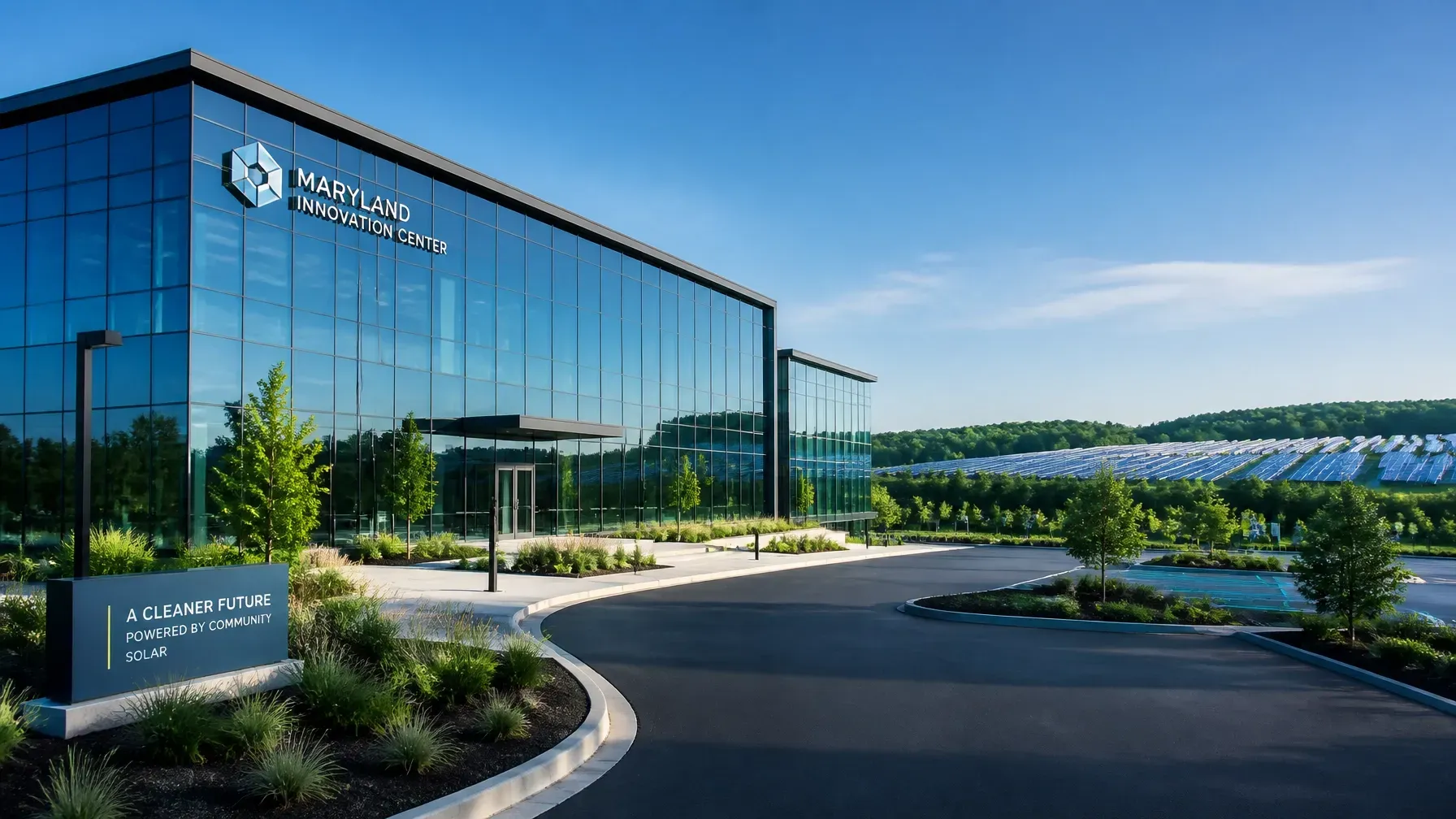
In the world of commercial operations, finding a way to slash overhead by double digits without spending a dime upfront is usually a red flag for a "too good to be true" offer. But in 2026, for businesses operating within the BGE, Pepco, Potomac Edison, and Delmarva utility territories across Maryland and Delaware, this isn't a sales pitch, it’s a regulatory reality. Community solar has evolved from a niche pilot program into a mainstream financial strategy for savvy business owners. If your business pays its own utility bills but doesn't have the roof space, the capital, or the long-term lease to install traditional solar panels, community solar is your bridge to immediate savings. The good news? You can typically reduce your monthly electricity spend by 8% to 12% simply by enrolling. Here is how your business can capture this "easy win." Key Takeaways Zero Upfront Costs: No installation, no equipment maintenance, and no capital expenditure. Guaranteed Savings: Most subscriptions offer a fixed percentage discount (typically 8–12%) on the solar credits applied to your bill. Tenant-Friendly: Perfect for businesses that rent their office, warehouse, or retail space. Market Reach: Available to businesses in BGE, Pepco, Potomac Edison, and Delmarva (MD & DE) territories. Risk Mitigation: Electric Advisors handles the vetting to ensure you choose a project with favorable terms and no hidden cancellation fees.

For most business owners in Washington, D.C. and Maryland, June 1st marks the unofficial start of summer: the return of rooftop happy hours, tourists swarming the National Mall, and the inevitable cranking of the HVAC system. But in the world of energy management, June 1st is something much more significant. It is the "Energy New Year." If you manage a commercial property, a non-profit, or a restaurant, this date represents the reset button for how your utility costs are calculated for the next twelve months. While many decision-makers focus solely on the "supply rate" on their bill, there is a hidden mechanism called the Peak Load Contribution (PLC) that could be quietly inflating your costs by thousands of dollars The good news? You aren’t powerless. By understanding how the grid works and taking a few strategic steps this spring, you can "beat the surge" and secure better financial predictability for your organization. The June 1st Milestone: Why It’s the "Energy New Year" In the Mid-Atlantic region: specifically within the territories served by utilities like Pepco and BGE: we operate under the PJM Interconnection . PJM is the regional transmission organization that coordinates the movement of wholesale electricity across 13 states and D.C. Every year on June 1st, PJM begins a new "delivery year." This is the date when the "Capacity Tags" (or PLC) assigned to every commercial building are updated based on the previous summer’s usage. Why does this matter to you? Because the capacity charge often makes up 25% to 40% of a commercial electricity bill. If your building was inefficient during the hottest days of last summer, you are about to pay the price for it starting this June. Conversely, what you do this summer will dictate your fixed costs for June 2027 through May 2028. The Hidden Problem: Understanding Capacity Charges and Your PLC Most business owners look at their bill and see "Kilowatt-hours (kWh)": that’s how much energy you used. But the Capacity Charge is based on your "Peak Load Contribution." Think of it like a "reservation fee" for the grid. PJM needs to ensure there is enough power available if every single building turned on every single light and AC unit at the exact same moment. To fund this readiness, they charge businesses based on their highest usage during the grid's "Five Peak Hours" of the previous summer. The Problem: If your restaurant, condo building, or school had a massive spike in usage on a Tuesday afternoon in July when the grid was stressed, your PLC (or Capacity Tag) will be high. You will then be billed at that "peak" rate every single month for the following year, regardless of how little energy you use in the winter. For many commercial clients, this is a "ghost charge" that feels impossible to control. But with the right services , it becomes a manageable variable.
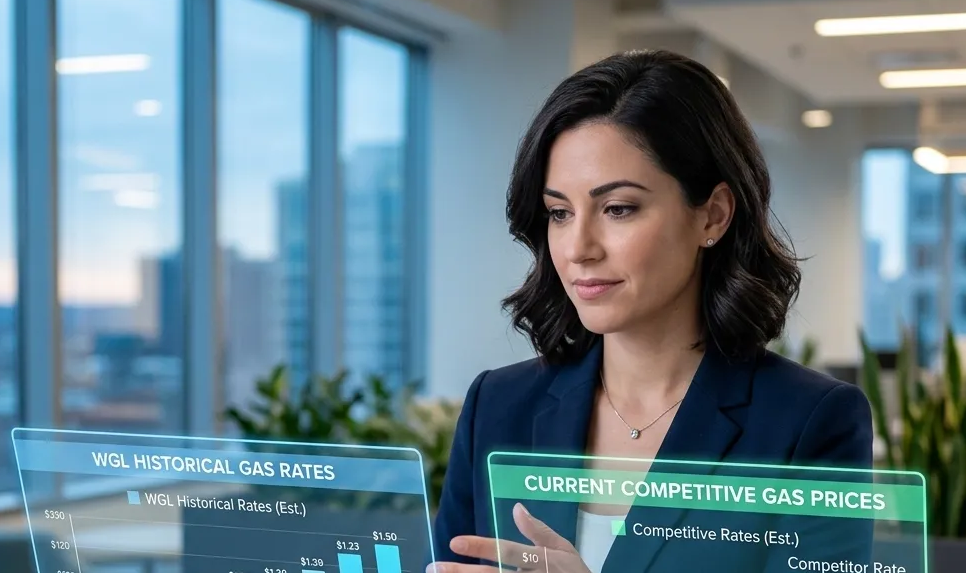
For business owners in Maryland, Washington, DC, and Virginia —right here in our backyard —energy costs are more than just a line item: they are a significant variable that can impact quarterly profitability and long-term operational planning. In recent years, the natural gas market has been characterized by notable volatility. From global supply chain disruptions to shifting domestic production levels, the price you pay for the blue flame in your furnace or the heat in your commercial kitchen has likely felt like a moving target. At Electric Advisors, Inc. , we believe that data-driven decision-making is the only way to effectively manage utility expenses. To help you understand where the market has been and where it is going, we have analyzed the historical procurement costs for Washington Gas (WGL) and compared them to the current opportunities available through competitive suppliers across Maryland, Washington, DC, and Virginia. The results are clear: across the WGL service territory in MD, DC, and VA , the cost of sticking with the utility’s default Purchased Gas Charge (PGC) may be significantly higher than many business owners realize. The Benchmark: Washington Gas Historical PGC Rates in Maryland, DC, and Virginia Every month, Washington Gas updates its Purchased Gas Charge (PGC) . This is the rate at which the utility passes through the cost of the natural gas it buys on the wholesale market to its customers. By law, the utility does not make a profit on the gas itself; they make their money on the delivery and infrastructure. However, the price they pay—and the price you eventually see on your bill—is subject to the fluctuations of the monthly wholesale market. For businesses in the broader WGL footprint, the important takeaway is this: Washington Gas default supply pricing and competitive market opportunities are consistent across its service territory in Maryland, Washington, DC, and Virginia. In other words, the same benchmark applies whether your business is in suburban Maryland, downtown DC, or Northern Virginia. Looking back at the last 24 months across the WGL service territory in MD, DC, and VA , we see a story of dramatic shifts: 24-Month Average WGL PGC: Approximately $0.68 per therm . The 2025 Spike: In April 2025, rates peaked at a staggering $0.8085 per therm . The 2026 Moderation: As of April 2026, the WGL rate has settled to $0.6382 per therm . While the 2026 rate is a welcome decrease from the highs of the previous year, it remains significantly higher than the rates seen a decade ago. For context, in 2010, the rate hovered around $0.32 per therm. We have seen a steady, long-term upward trend that necessitates a more proactive approach to commercial natural gas rates .